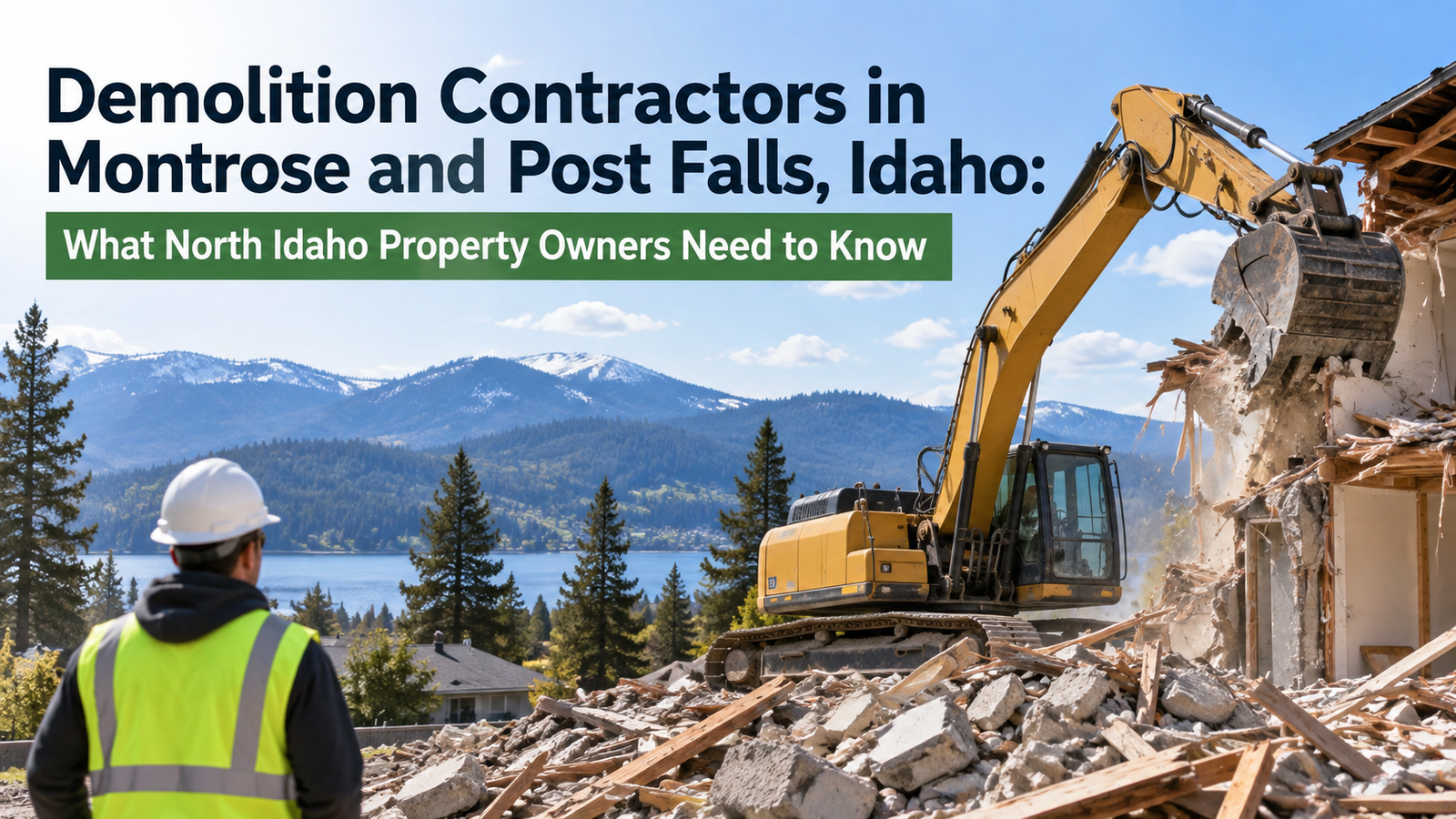
Post Falls is one of North Idaho’s fastest-growing communities, and Montrose is among its most established residential neighborhoods a well-developed subdivision west of the city’s core that represents the kind of mature residential community where renovation, teardown, and site preparation projects are a consistent part of the local construction landscape. As Post Falls and the surrounding Kootenai County area have grown from a small community into a significant regional hub in the Idaho Panhandle, the demand for professional demolition services has grown alongside the development activity. This guide explains what Demolition Contractor Montrose provide in the Post Falls and Montrose area, what Idaho’s climate and regulatory environment mean for demolition work, and what property owners should understand before beginning a project.
The North Idaho Context for Demolition Work
North Idaho’s Panhandle region the thin northern strip that connects Idaho to Canada between Washington state to the west and Montana to the east has its own distinctive character that shapes demolition work here differently than in other parts of the country. The region’s climate, which brings significant snowfall, freeze-thaw cycling, cold winters, and dry summers, creates building deterioration patterns specific to the inland Pacific Northwest that demolition contractors familiar with the area understand and plan for.
Post Falls sits along the Spokane River east of the city of Spokane, Washington, and its growth has been driven by population migration from the Spokane metro area, from California, and from other western states seeking Idaho’s lower tax environment, outdoor recreation access, and comparatively affordable real estate. This growth has brought significant new construction, which in turn requires demolition of older structures, clearance of raw land, and site preparation that enables development.
The Montrose neighborhood in particular represents the kind of established residential subdivision where older homes are increasingly candidates for renovation or replacement as property values have risen and as the housing stock has aged into conditions where significant investment is needed. Teardown projects purchasing older homes on desirable lots, demolishing the structure, and building new have become more common in Post Falls neighborhoods as land values have increased relative to structure values.
Idaho Licensing and Regulatory Requirements for Demolition
Idaho requires that contractors performing construction and demolition work hold appropriate licensing through the Idaho Contractors Board. Demolition contractors working in Post Falls and throughout Kootenai County must maintain current contractor registration, carry general liability insurance, and maintain workers compensation coverage for their employees. These requirements protect property owners from liability exposure if an uninsured worker is injured on their property and provide recourse through the licensing board if contractor disputes arise.
JTC Demolition, which serves Post Falls and the surrounding North Idaho Panhandle region, carries comprehensive liability insurance and maintains all required licensing for demolition work in Idaho. The company’s documentation of licensing and insurance should be available upon request before any project begins property owners in Montrose and throughout Post Falls should verify these credentials with any demolition contractor before engaging their services.
Idaho’s asbestos regulations, administered by the Idaho Department of Environmental Quality, require notification and specific work practices for demolition and renovation of structures containing regulated asbestos-containing materials. For structures built before 1981 which includes a significant portion of the older housing stock in Post Falls an asbestos survey by a certified inspector is required before demolition. If regulated materials are found, licensed abatement must precede structural demolition, and disposal must occur at a permitted facility.
North Idaho’s Climate and Its Effect on Demolition Projects
Post Falls and the Montrose area experience winter conditions that affect demolition project planning and execution in ways that differ from warmer-climate markets. Idaho Panhandle winters bring significant snowfall, extended freeze periods, and the freeze-thaw cycling that characterizes the transition seasons of fall and spring. These conditions affect both the structures being demolished and the operational capabilities of demolition equipment.
Frozen ground creates specific challenges for excavation and post-demolition site work. When the ground is frozen to depth which occurs in North Idaho during extended cold periods excavation is significantly more difficult and expensive than in unfrozen conditions, because frozen soil requires mechanical breaking before it can be dug and moved. Foundation removal and site grading are best sequenced to occur before deep freeze or after spring thaw rather than at the peak of winter.
Structures that have been damaged by freeze-thaw cycling a common condition in older North Idaho structures where roofing failures or plumbing failures have allowed water intrusion may have more extensive structural compromise than their exterior appearance suggests. A roof that leaks has allowed water to infiltrate the structure, which then freezes and expands in the walls and floor framing during winter, accelerating deterioration far beyond what the same water infiltration would cause in a milder climate. Demolition contractors experienced in North Idaho work recognize and plan for this characteristic of older structures in the region.
Summer’s dry conditions in North Idaho create the opposite challenge for demolition site management: dust control. During the dry summer months, demolition debris and disturbed soil can generate significant dust that disperses across neighboring properties without active suppression measures. Water trucks or misting systems on demolition sites during summer operations keep dust within the site boundary and protect neighboring properties from nuisance conditions.
Demolition Services Available in the Post Falls and Montrose Area
Residential demolition in Post Falls encompasses the full range of residential structure types found in North Idaho. Full house demolition the complete teardown of a residential structure in preparation for new construction or lot clearance is performed using excavators that work systematically from the roof down, loading debris into trucks for transport to recycling and disposal facilities. Garage and accessory structure demolition addresses the detached garages, sheds, old barns, and outbuildings that are common on Post Falls properties and that may be candidates for removal as the property is improved or developed.
Concrete demolition is one of JTC Demolition’s primary specialties in the Post Falls and North Idaho market. The company has completed over 2,000 concrete demolition projects throughout North Idaho, addressing old sidewalks and driveways that have become tripping hazards from freeze-thaw heaving, cracked and deteriorated patios, commercial parking lot sections requiring reconstruction, and foundations from demolished structures that must be removed to clear the site for new use.
Interior selective demolition serves the renovation market in Montrose and throughout Post Falls the controlled removal of specific interior elements within homes and commercial buildings that are being renovated rather than fully demolished. Kitchen gut-outs, bathroom strip-downs, wall removals for floor plan opening, and the clearance of commercial tenant spaces between occupants are all interior demolition scopes that benefit from the precision and care of a professional crew.
Debris removal and site cleanup services address the post-demolition clearance of accumulated debris, construction waste, and abandoned material from properties throughout Post Falls and the Montrose area. These services can be combined with demolition work in a single project scope or engaged independently for properties where debris has accumulated without a formal demolition project.
Post Falls Community Ties and What They Mean for Demolition Service
JTC Demolition’s presence in Post Falls is grounded in genuine community investment. As a third-generation demolition contractor serving the area since 2017, the company has built relationships with property owners, general contractors, and local government throughout the Panhandle. Local contractors who need debris removal on their job sites recommend JTC because of the company’s established reputation for reliability and professionalism within the local construction community. This community reputation built through consistent performance on projects throughout Kootenai County is what sustains a demolition operation in a market where word-of-mouth referral drives a significant portion of new project opportunities.
Understanding the local building codes, the specific soil conditions of the Post Falls area (which include the sandy and gravelly soils of the Spokane Valley aquifer recharge zone that create specific excavation conditions different from other parts of Idaho), the weather patterns that affect project scheduling, and the network of disposal and recycling facilities that serve the North Idaho market all represent local knowledge that a demolition contractor develops through years of regional operation. This local expertise is what distinguishes contractors who know the Post Falls and Montrose area from those who are unfamiliar with its specific conditions and requirements.
Common Questions About Demolition Contractors in Post Falls and Montrose
Does Idaho require permits for demolition work in Post Falls? Yes. Building permits are required for demolition work in Post Falls and throughout Kootenai County. The specific permit requirements depend on the scope of work full structural demolition, interior demolition, and certain specialized demolition scopes have different permitting pathways. Experienced local contractors manage the permit process as part of the project scope.
How does North Idaho’s winter affect demolition project scheduling? Demolition of above-grade structures can typically proceed year-round in North Idaho, though winter weather creates logistical challenges for equipment operation in heavy snow or ice conditions. Foundation removal, site grading, and post-demolition earthwork are best scheduled for the thaw-to-fall window when the ground is accessible. Planning a demolition project in late summer or fall before the onset of winter conditions provides the most flexibility for completing all phases of the project without weather interruption.
What happens to the material from a Post Falls demolition project? Concrete from demolition is crushed and recycled as aggregate for road base and construction fill throughout the North Idaho market. Metal components are separated for scrap metal recycling. Wood waste from frame construction is processed through appropriate disposal or biomass channels. The responsible disposal and recycling of demolition materials is part of the professional standard that licensed demolition contractors maintain throughout Kootenai County.